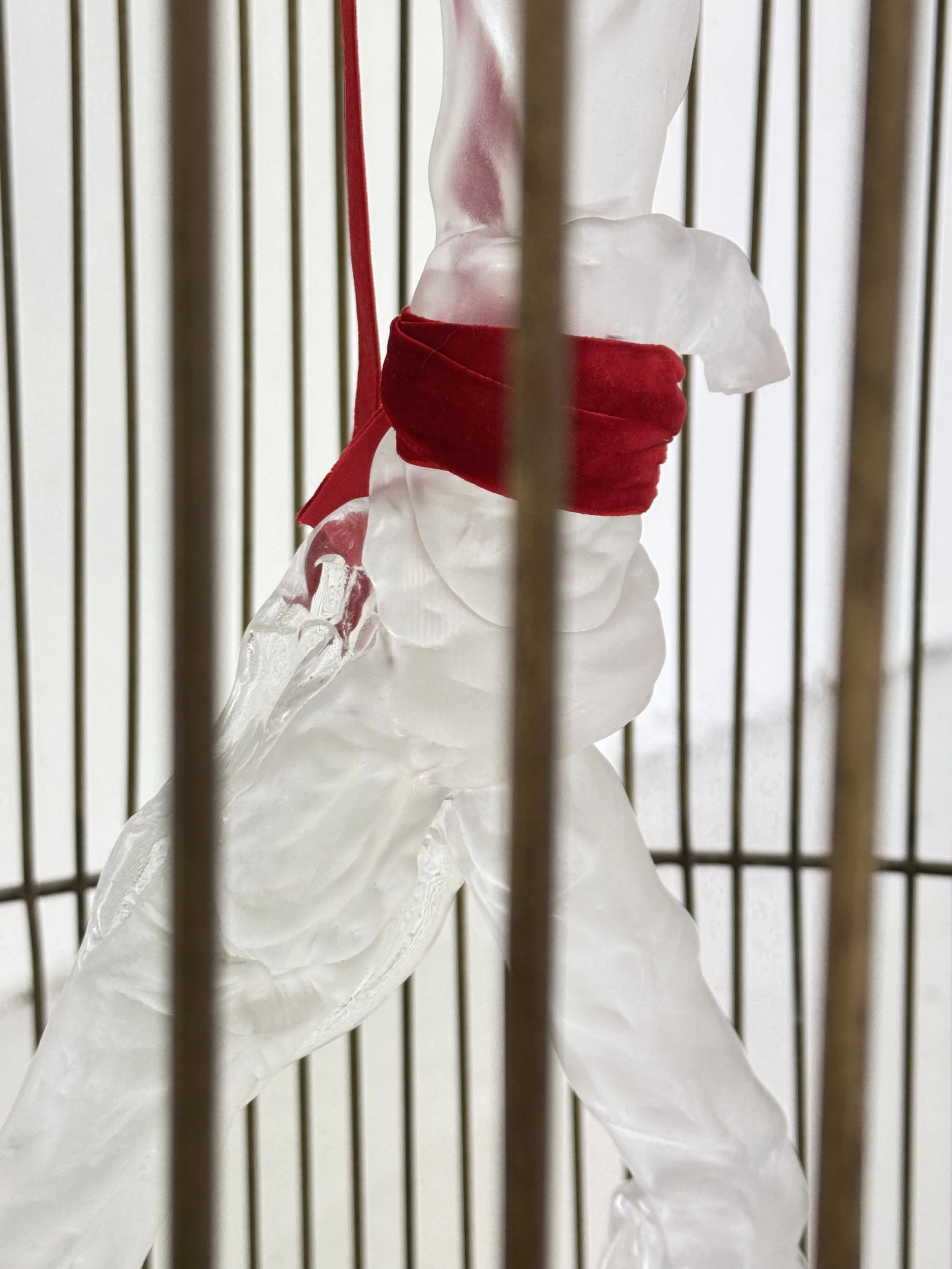
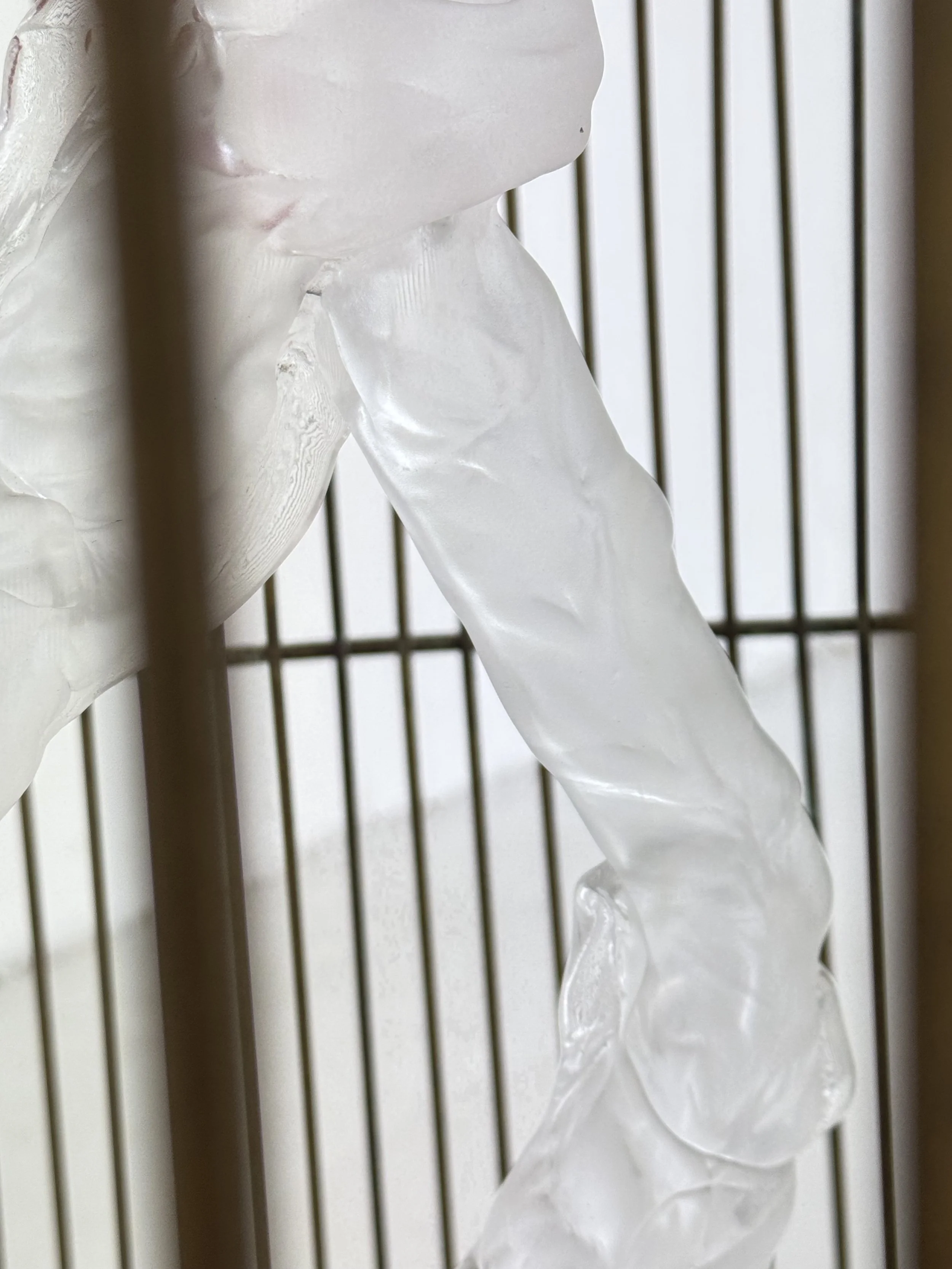
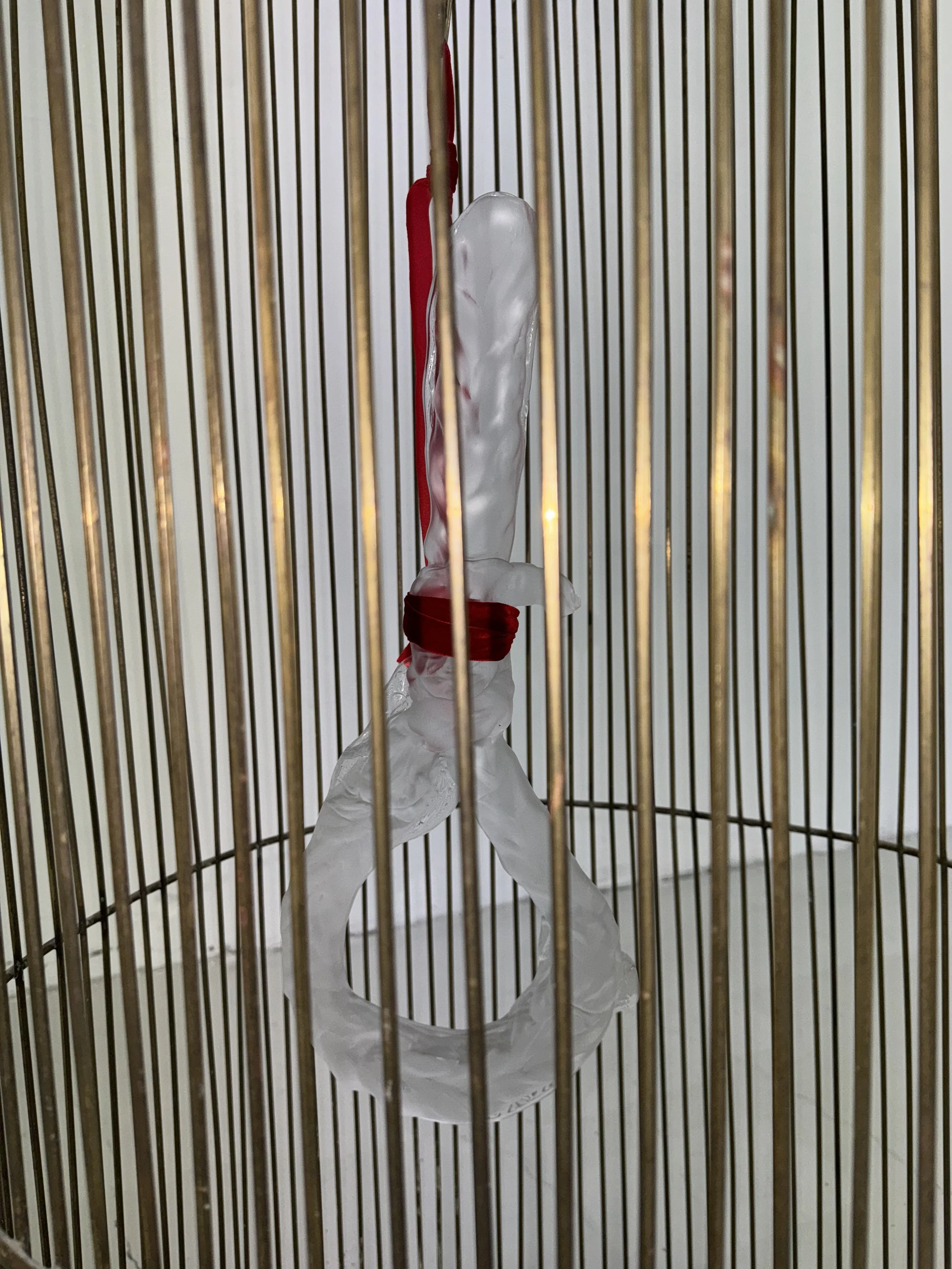
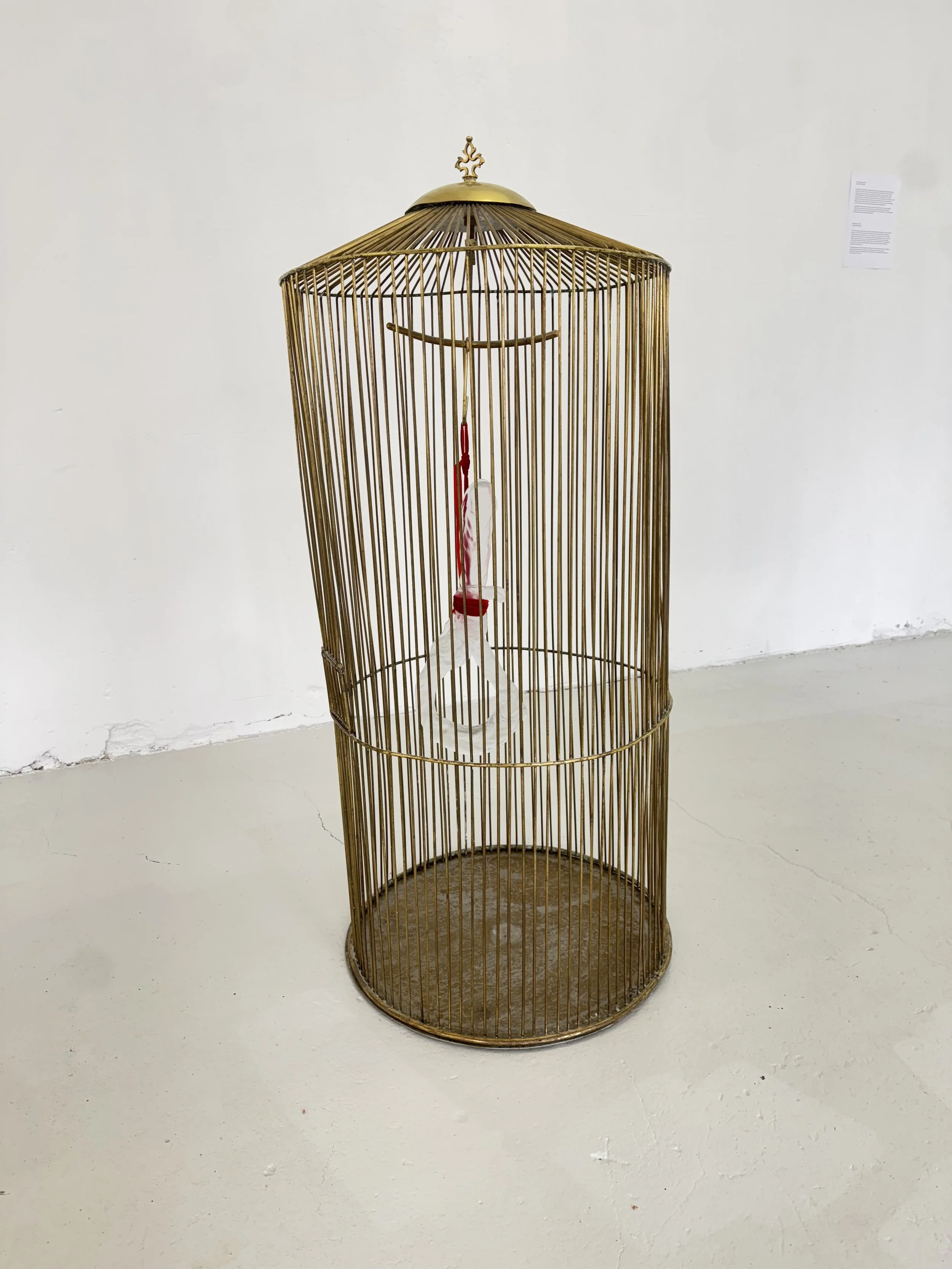
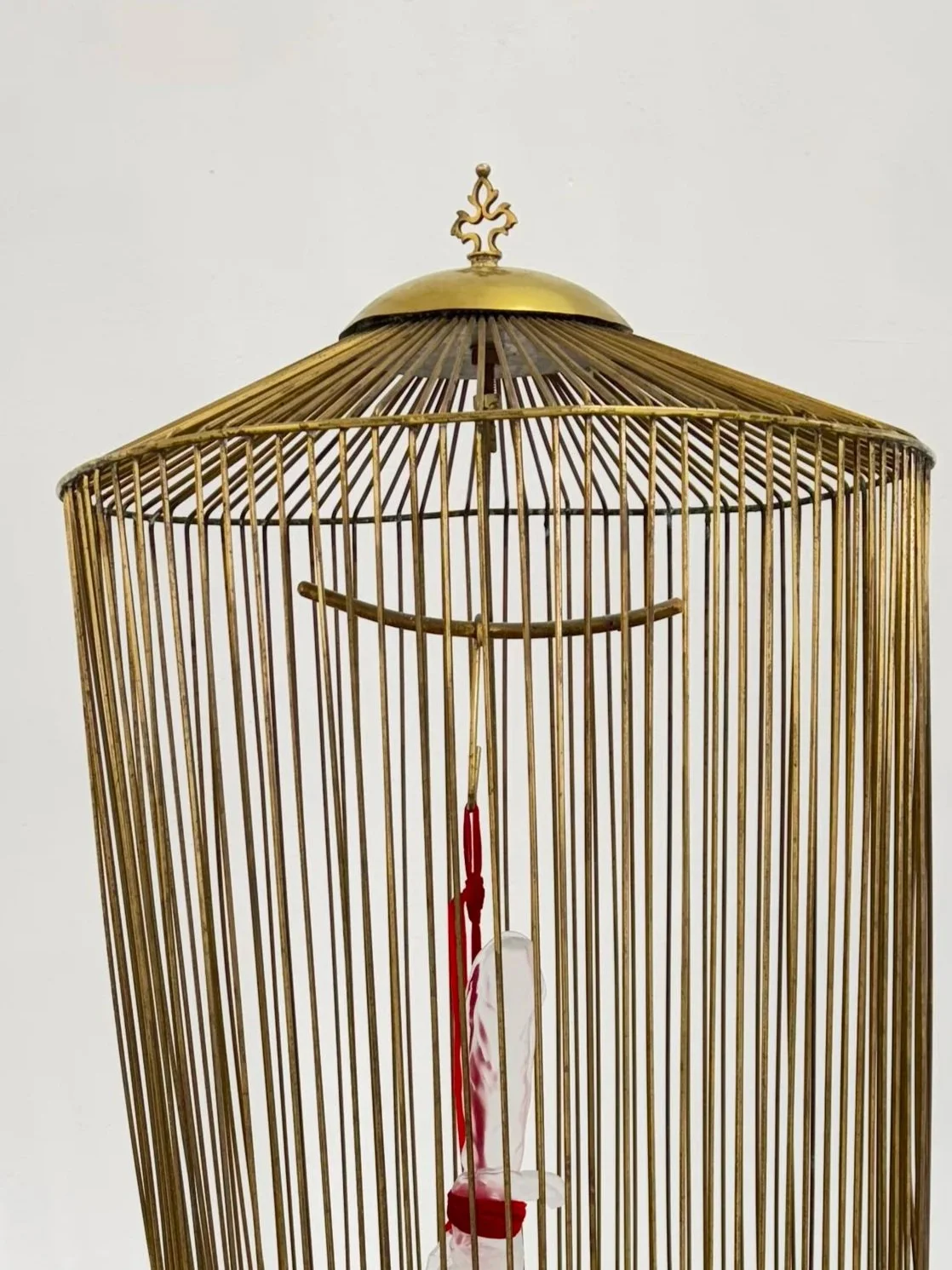
Punottu hiljaisuus / Braided silence 2026
Hot casted glass
Brass cage
Velvet ribbon
This work explores structural sexism, misogyny, and the invisibility of women in society. Its central symbol is a noose formed from braided hair. The hair references traditional ideals of femininity— beauty, adornment, and femininity itself—but woven into a noose, it becomes a symbol of control, oppression, and violence. The red velvet ribbon refers both to traditional hair accessories and to the violence experienced by women; its color evokes blood, while its soft texture creates a striking contrast with the brutality it represents. Trapped within a cage and positioned low to the ground, the noose reflects how women have historically been looked down upon, controlled, and defined through patriarchal structures.
By bringing together symbols of femininity and violence, the work exposes the deeply rooted power structures that continue to shape women’s lives. It challenges the viewer to confront an uncomfortable reality: gender inequality is not accidental, but woven into both the history and the present-day fabric of society.
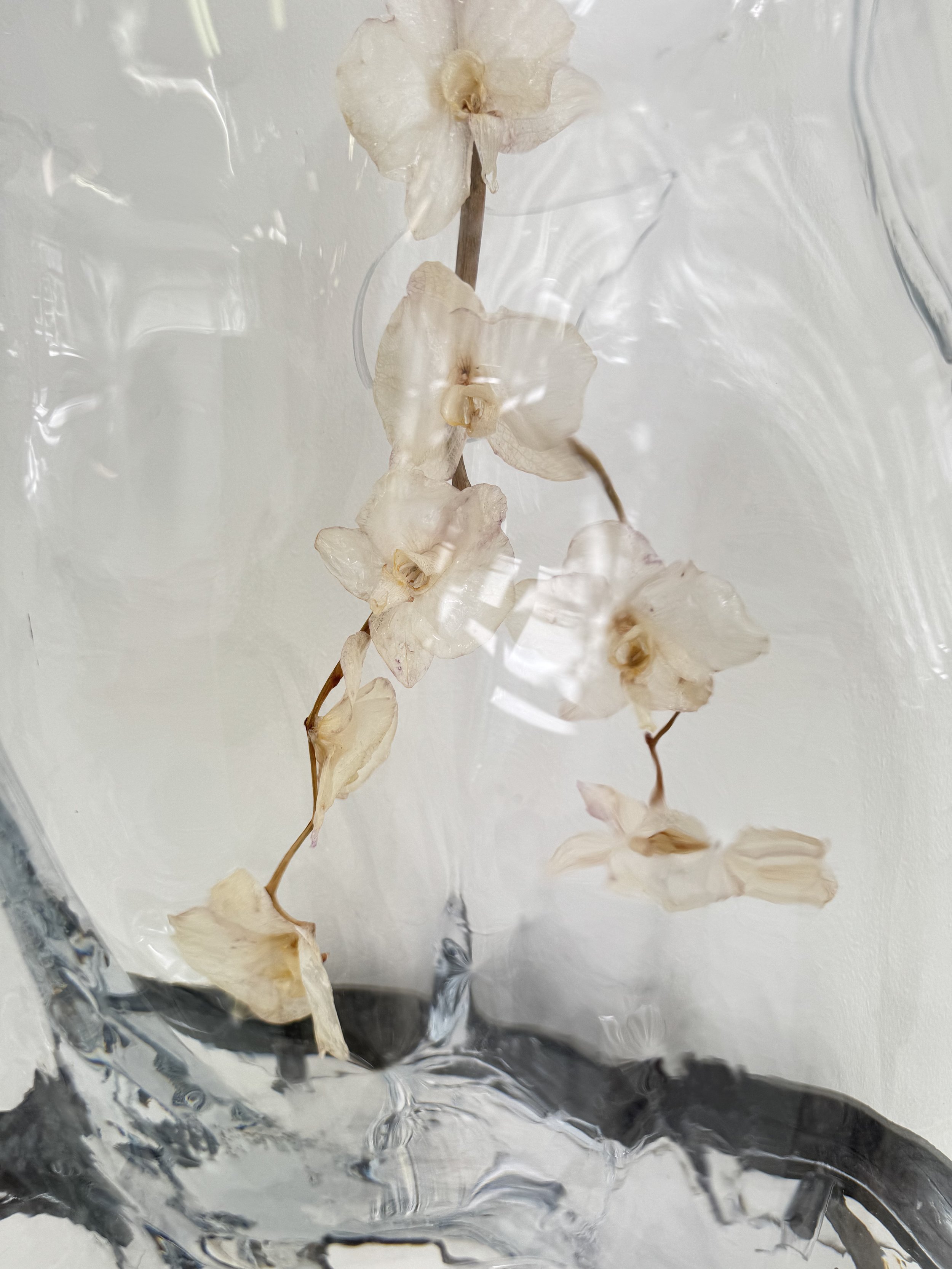
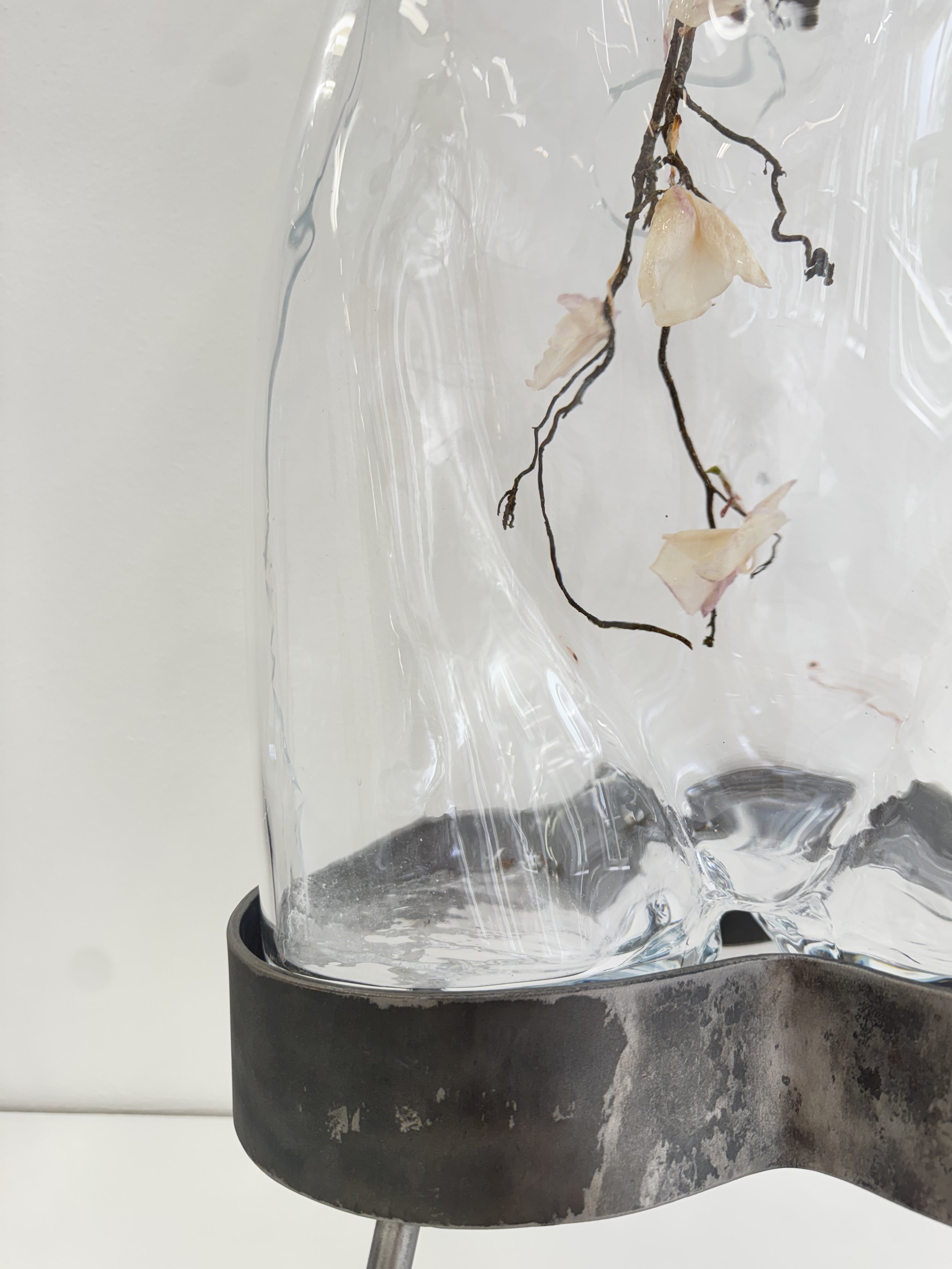
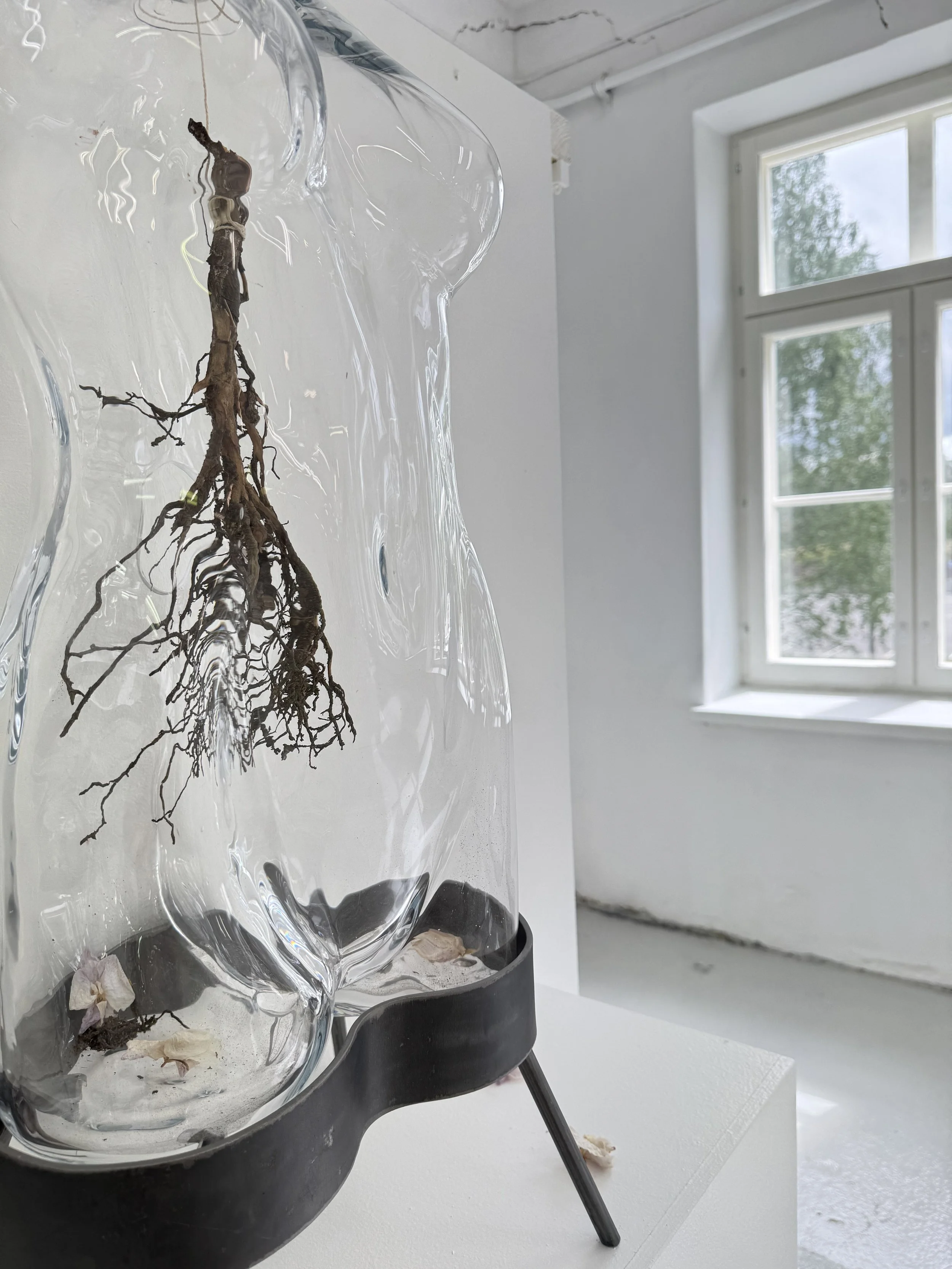
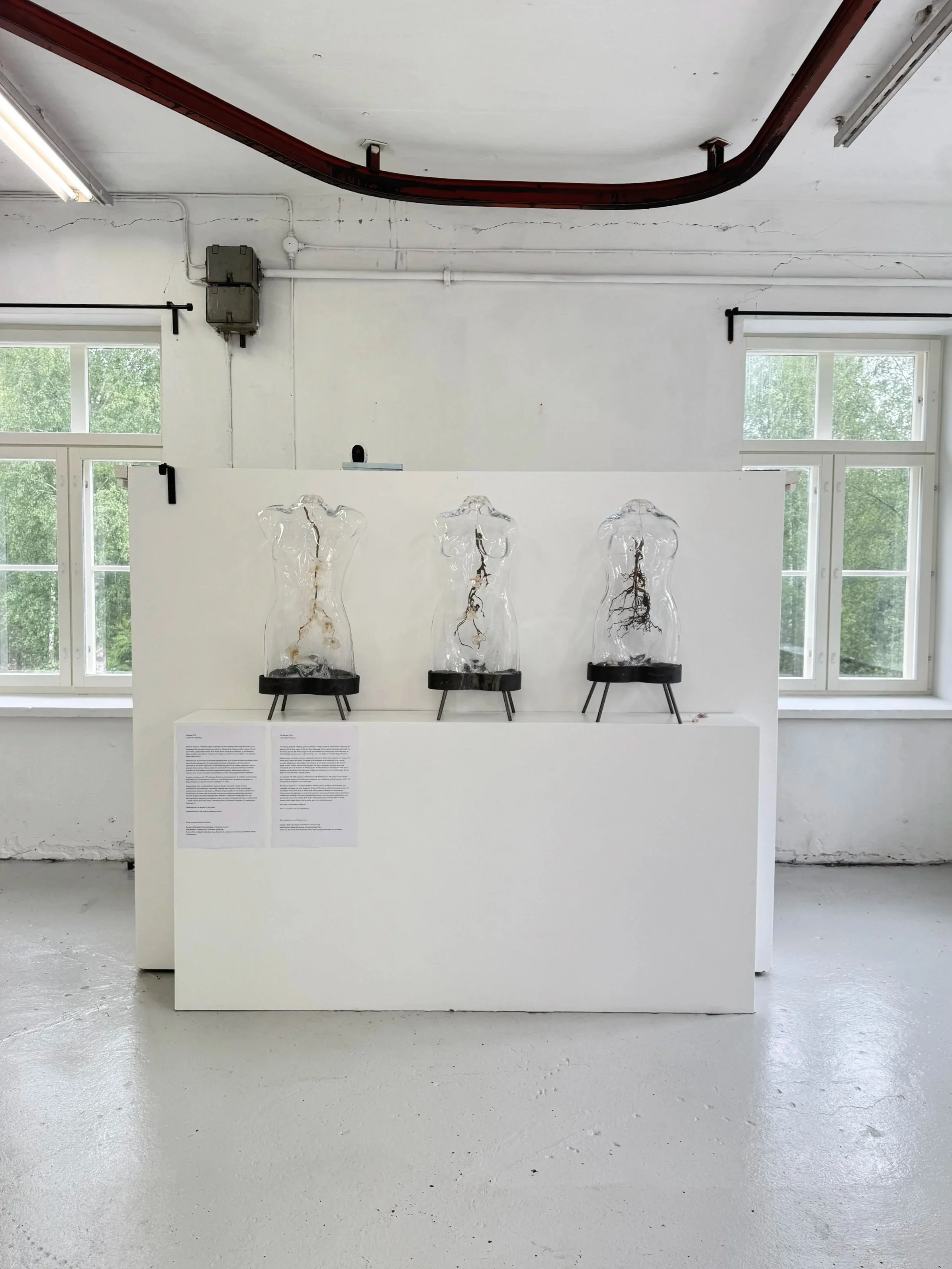
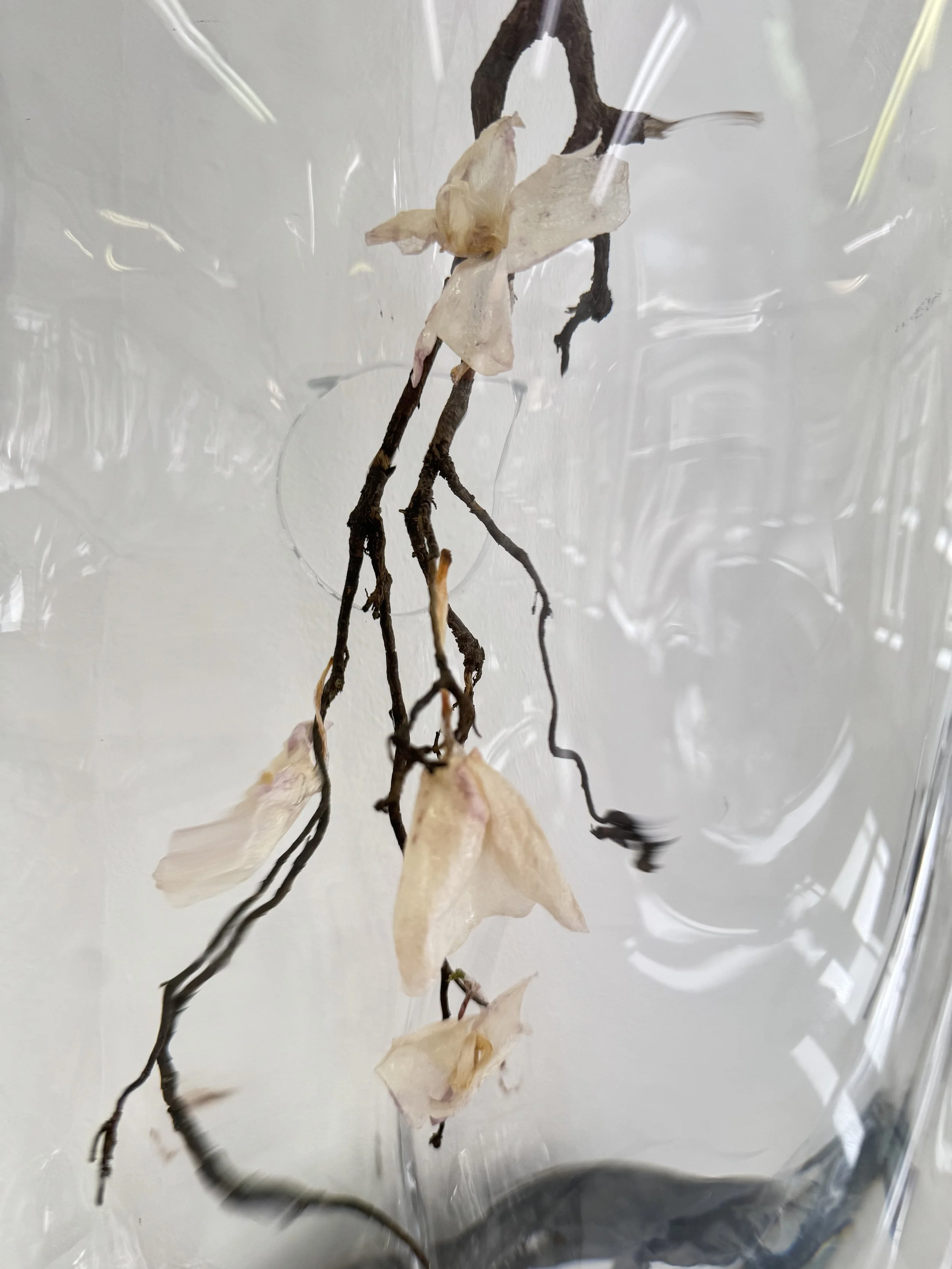
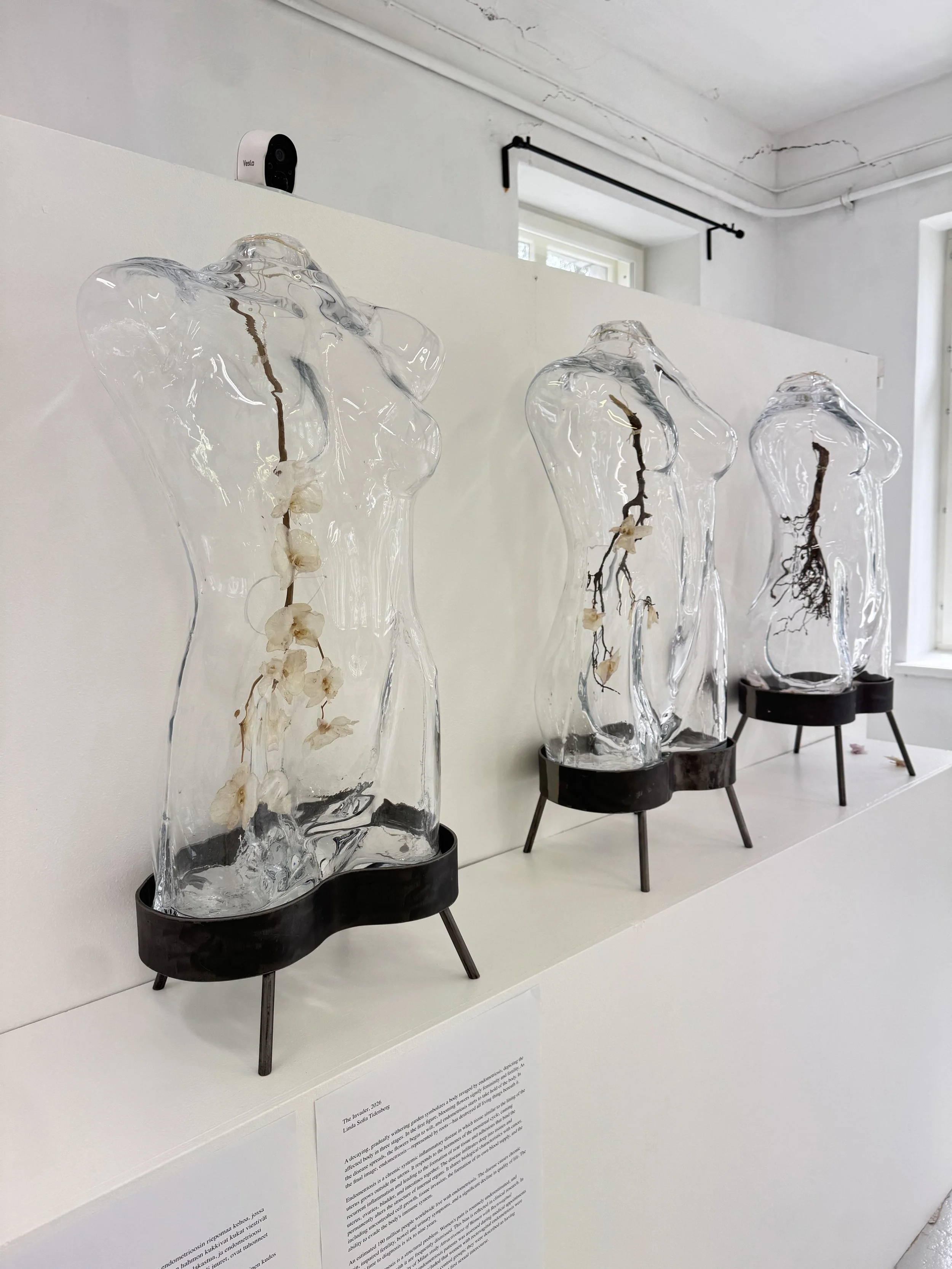
Valtaaja / The Invader 2026
Mould blown glass sculptures
Wrought iron
Real flowers, branches and roots
A decaying, gradually withering garden symbolizes a body ravaged by endometriosis, depicting the affected body in three stages. In the first figure, blooming flowers signify femininity and fertility. As the disease spreads, the flowers begin to wilt, and endometriosis starts to take hold of the body. In the final image, endometriosis—represented by roots—has destroyed all living things beneath it.
Endometriosis is a chronic systemic inflammatory disease in which tissue similar to the lining of the uterus grows outside the uterus. It responds to the hormones of the menstrual cycle, causing recurrent inflammation and leading to the formation of scar tissue and adhesions that bind the uterus, ovaries, bladder, and intestines together. The disease infiltrates deep into tissues and permanently alters the structure of internal organs. It shares biological characteristics with cancer, including uncontrolled cell growth, tissue invasion, the formation of its own blood supply, and the ability to evade the body's immune system.
An estimated 190 million people worldwide live with endometriosis. The disease causes chronic pain, impaired fertility, bowel and urinary symptoms, and a significant decline in quality of life. The average time to diagnosis is six to nine years.
The delay in diagnosis is a structural problem. Women's pain is routinely underestimated, and conditions associated with it are frequently dismissed. This bias is reflected in clinical research. In the publicly funded University of Milan study Attractiveness of Women with Rectovaginal Endometriosis, the appearance of endometriosis patients was assessed during medical appointments without their knowledge. The study concluded that women with rectovaginal endometriosis were perceived as more attractive than those in the control groups; they were described as having slimmer bodies, larger breasts, and an earlier age at first sexual intercourse.
This study received ethical approval. There is no known cure for endometriosis.
With gratitude to my professional team,
Kaappo Lähdesmäki, Master Glassblower, Glassism coop
Sami Ryhänen, Master Blacksmith, Onnellisen Sepän Paja
And to my dear friend Anna Estarriola, whose help in creating the
mould was invaluable.
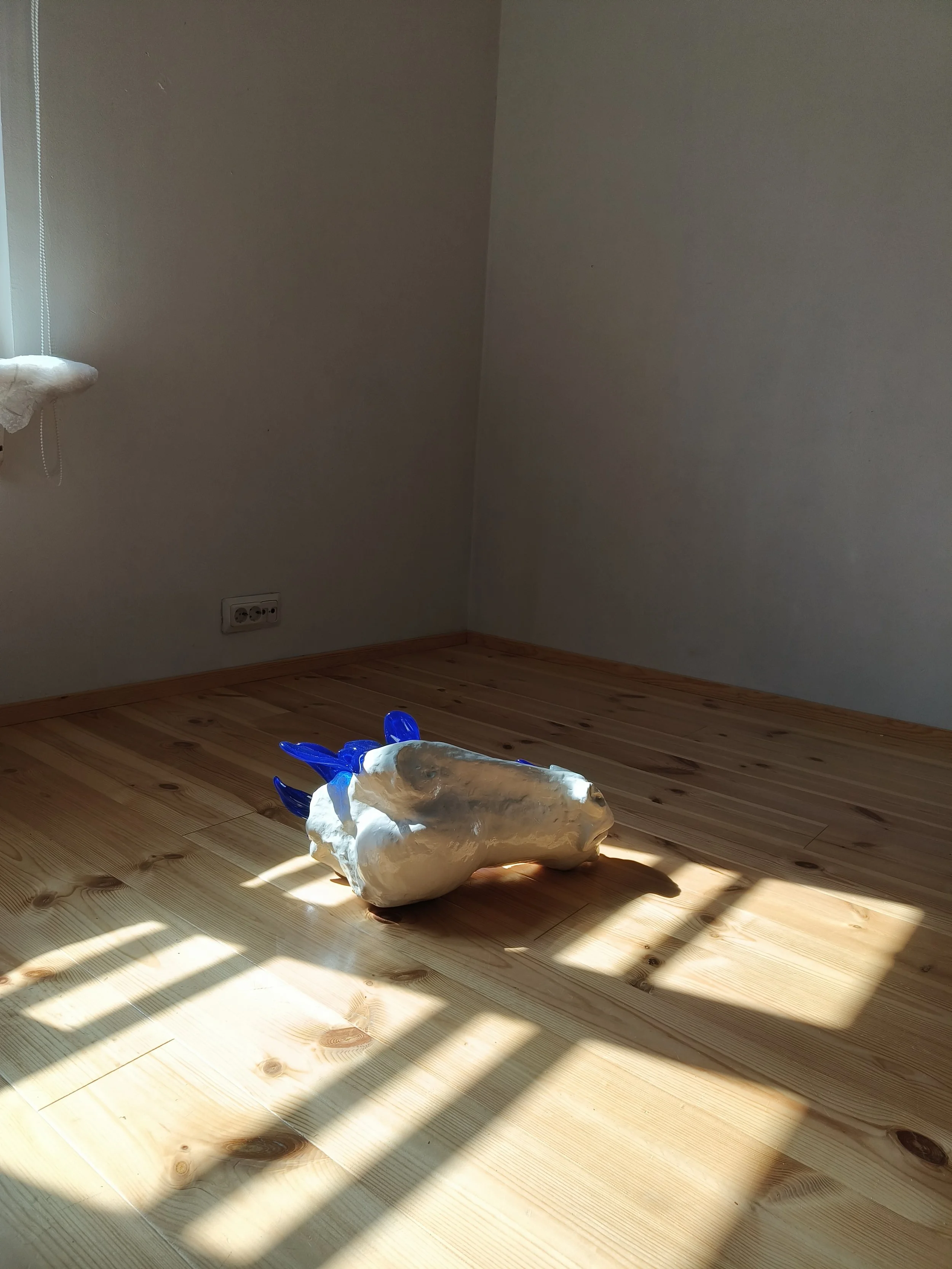
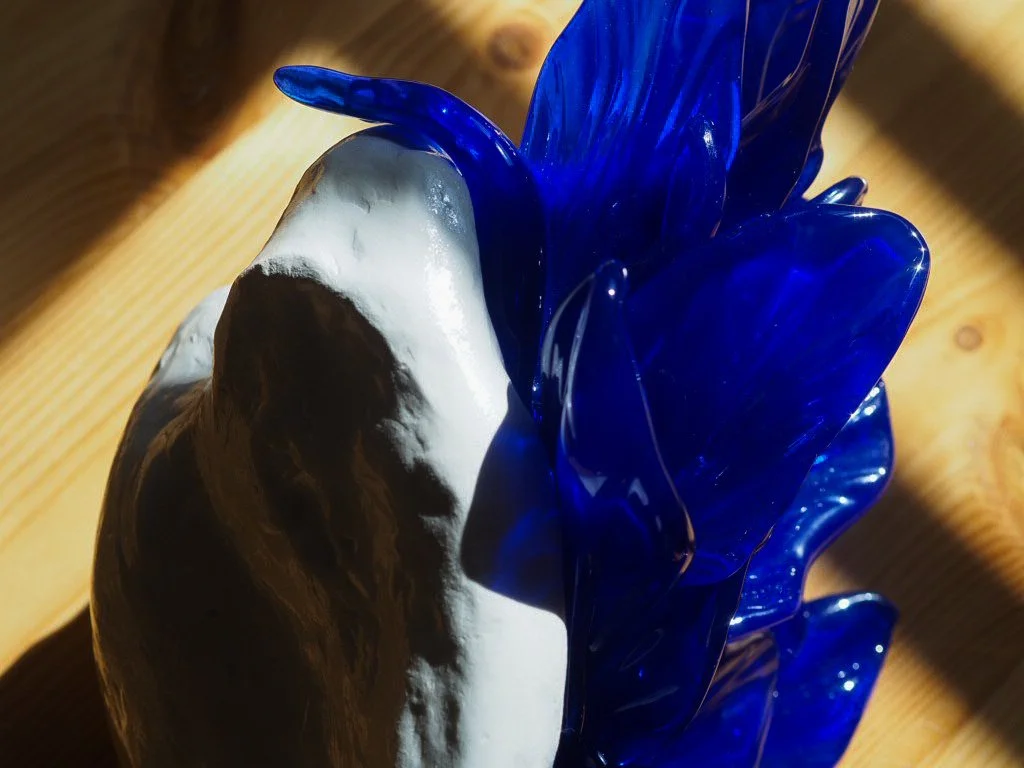
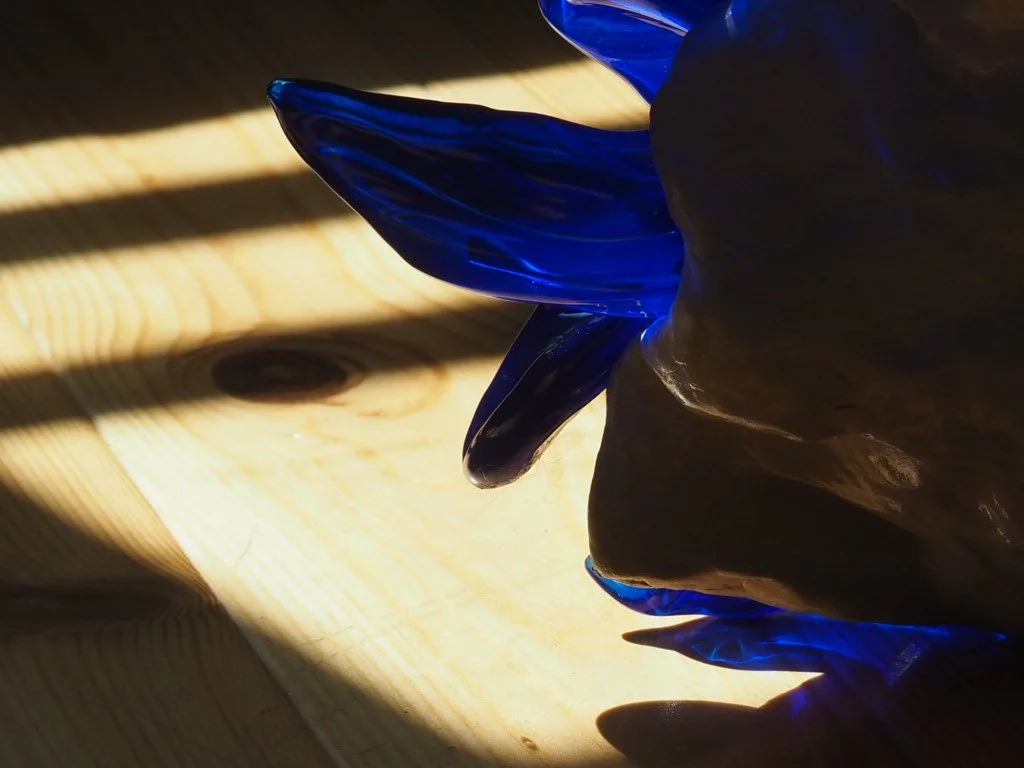
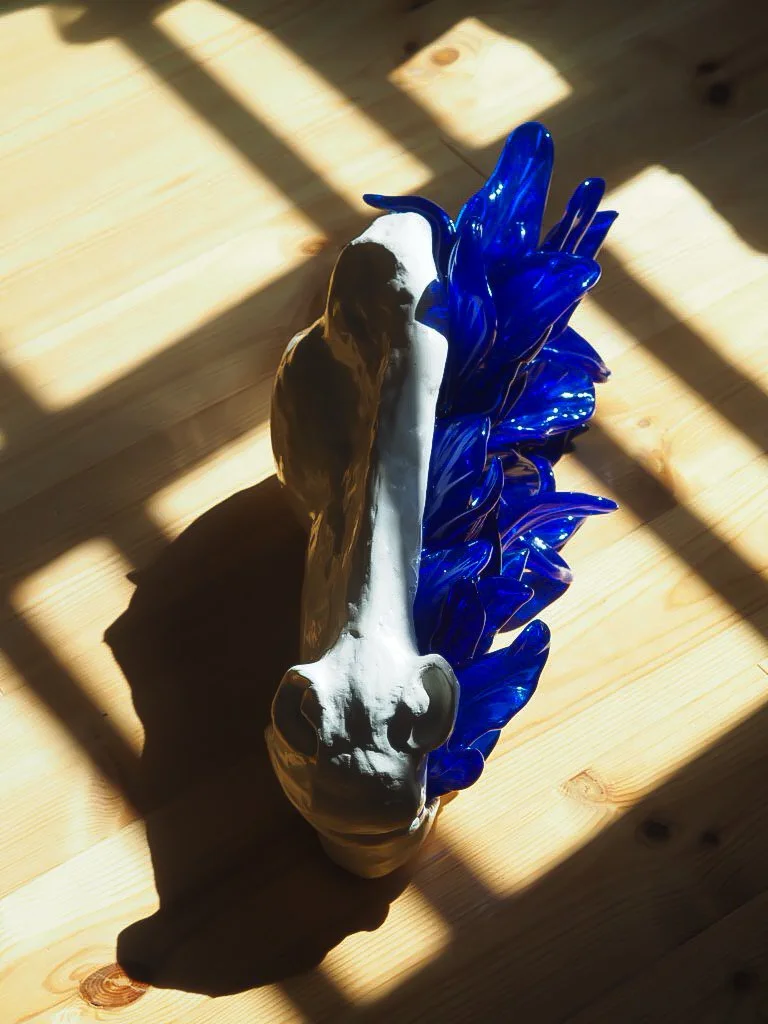
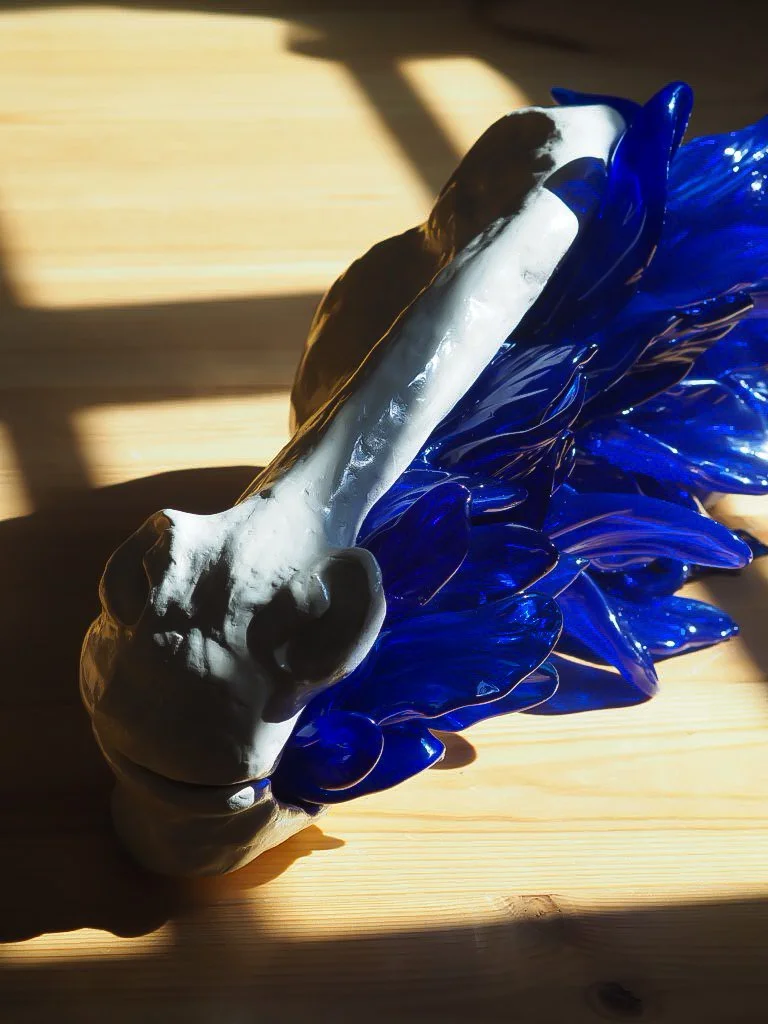
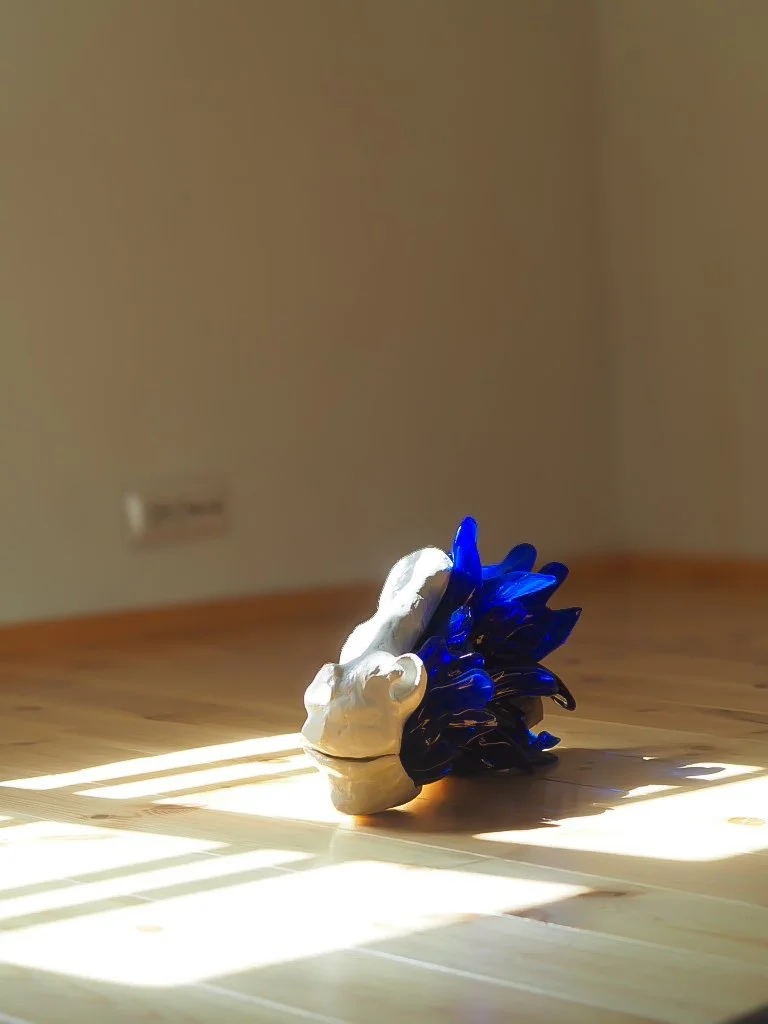
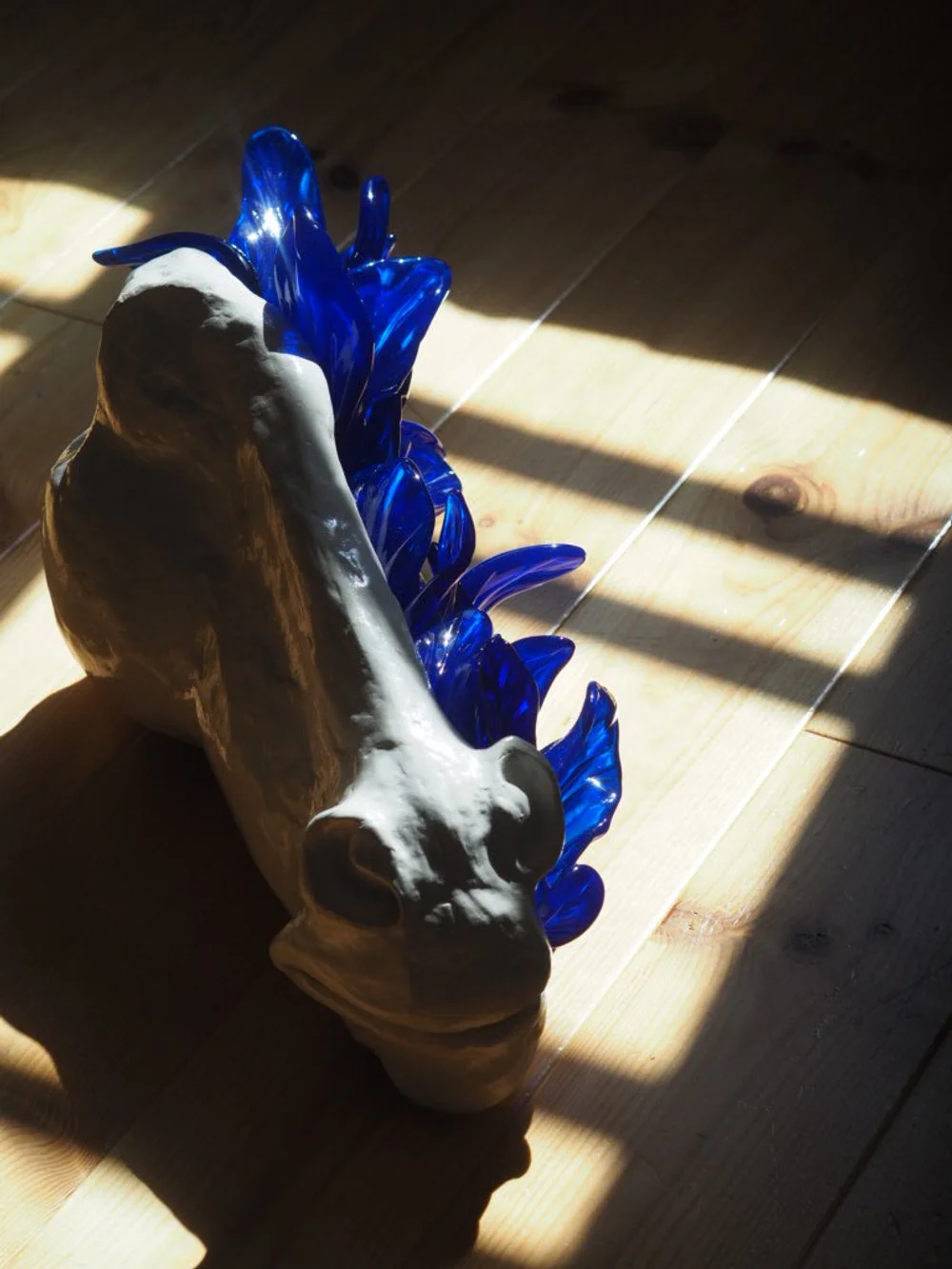
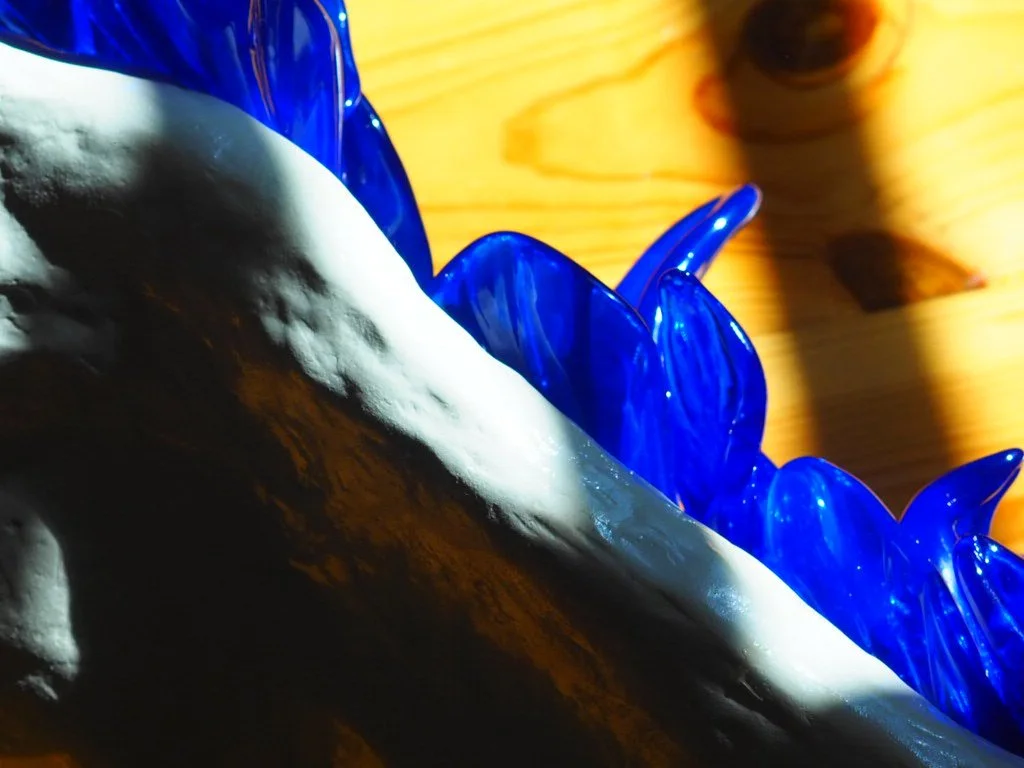
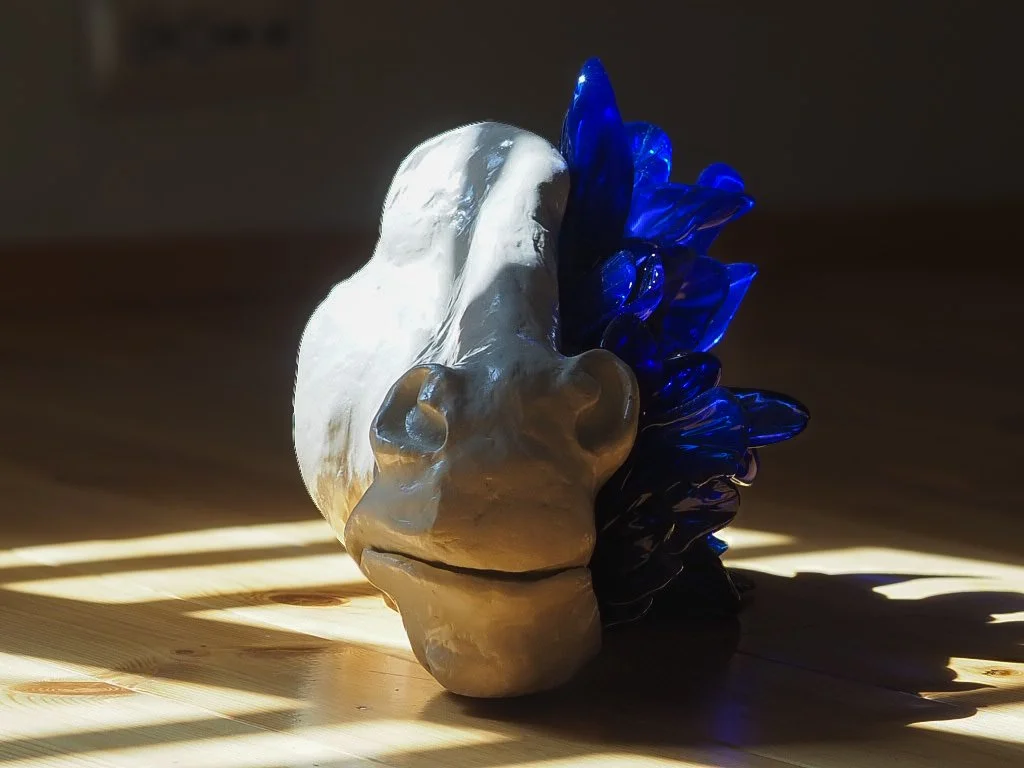
In ancient Baltic-Finnic lore, the horse was never just a beast of a burden - it was a soul carrier, a companion of silence that steadied stormy hearts, a being to whom one could whisper their grief, lifting pain from the soul and vanishing with it like wind through the last leaves of autumn. Like a moonlit winter night, a porcelain white creature rests in a crowded room, waiting. From within its hollow body, blue calla lilies bloom - born of sorrow and loss, yet standing proud in their roots, blue as belief in what is yet to come.
This installation evolved alongside my journey of reconnecting with my Karelian roots. Its title, Silmätöin syndyzeni zirkkalolla, is drawn from a beautiful poem by Mirva Haltia and translates as “eyeless for the reflection of my ancestors.”
During my exploration of the Karelian language, I had the privilege of learning from and getting to know Mirva Haltia. Her guidance, generosity, and deep knowledge have been invaluable in helping me better understand both the language and the culture. I am profoundly grateful for her unwavering support and for the patience and kindness she has shown in answering my many questions along the way.
As part of this work, I wanted to acknowledge her contribution and highlight her remarkable work. She is an exceptional writer whose efforts have played a significant role in preserving, celebrating, and strengthening Karelian culture, while deepening the understanding of Karelian heritage for myself and many others.
Suuret passibot. (Many thanks.)
Silmätöin syndyzeni zirkkalolla /
Eyeless for the reflection of my ancestors 2025
Mixed media sculpture
Free blown glass flowers
“typäkkä ofotnniekka / useless devotee
iänetöin ilmain ezimuamoni kieldä /
voiceless without the language of my foremothers
korvatoin kanzani kuačkalla /
earless to the tales of my people
silmätöin syndyzeni zirkkalolla /
eyeless for the reflection of my ancestors
kielenke kindrauvun puaksuh vezipoven vejän /
fruitless fight over phrases
pulling water with my seine again again again”
Mirva Haltia, Gruuga, 2023



51 days collection
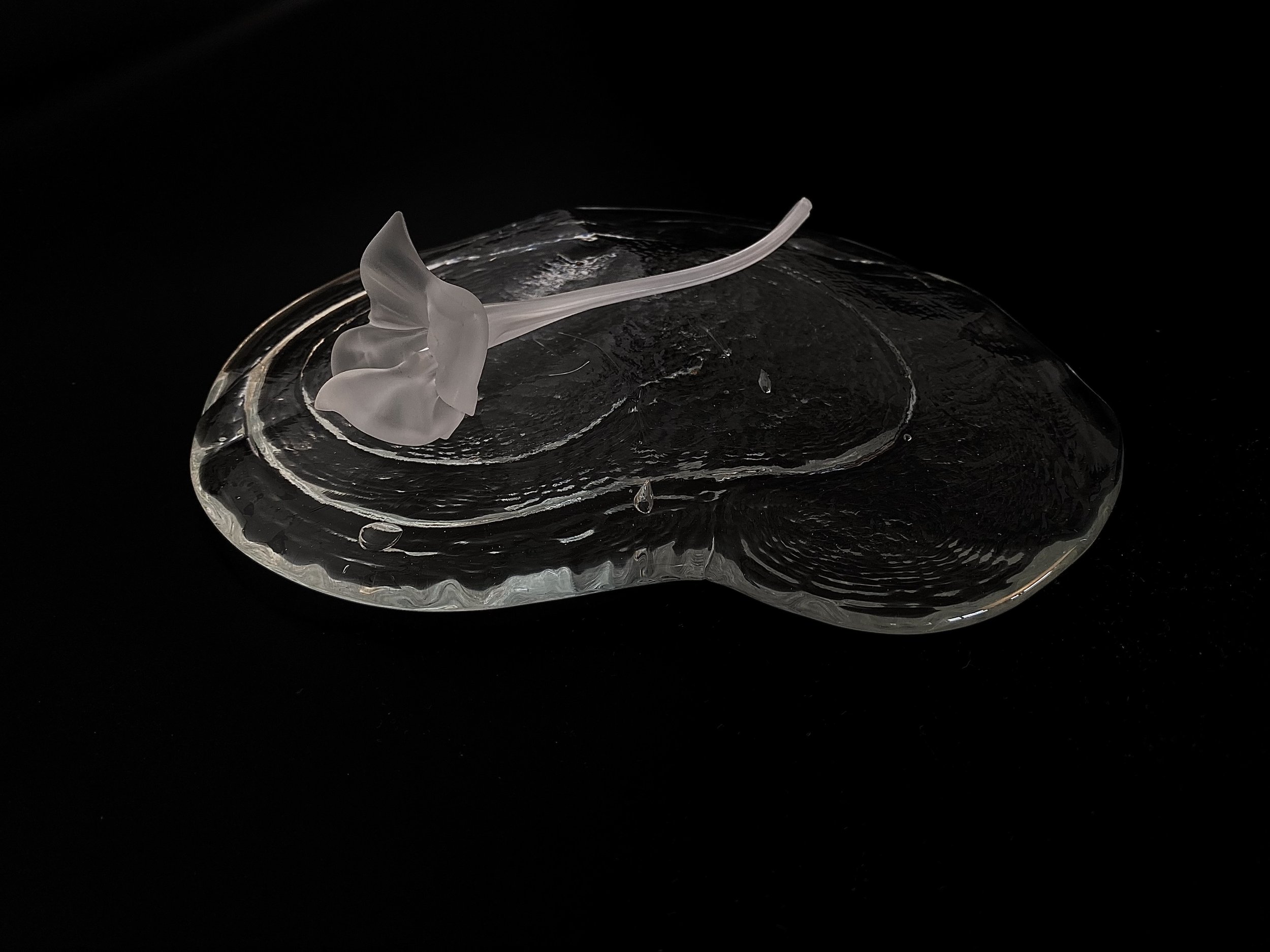
”51 days” 2023
“a puddle.” 2024
“a puddle in Australia” 2024
Free blown glass flowers
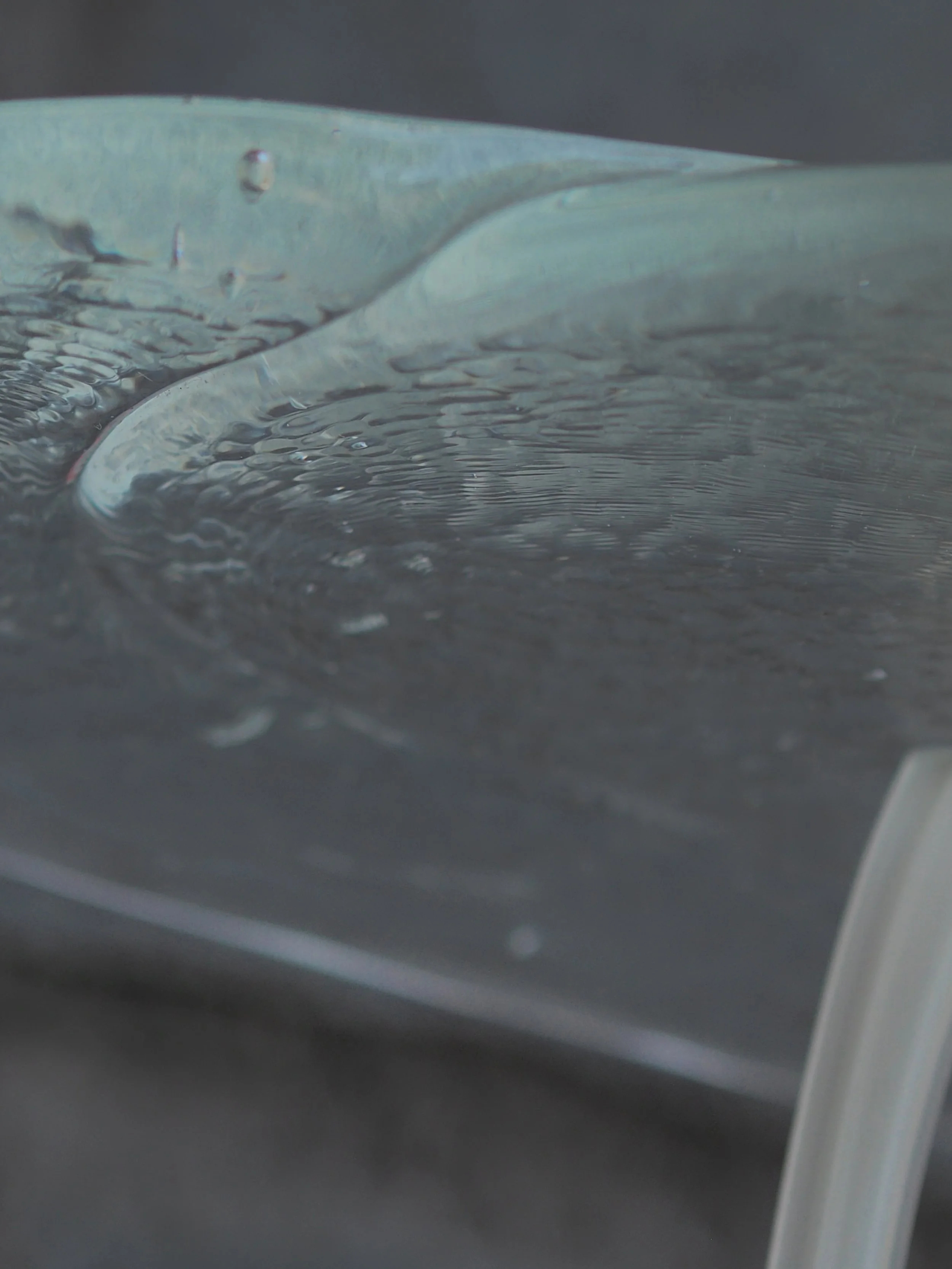
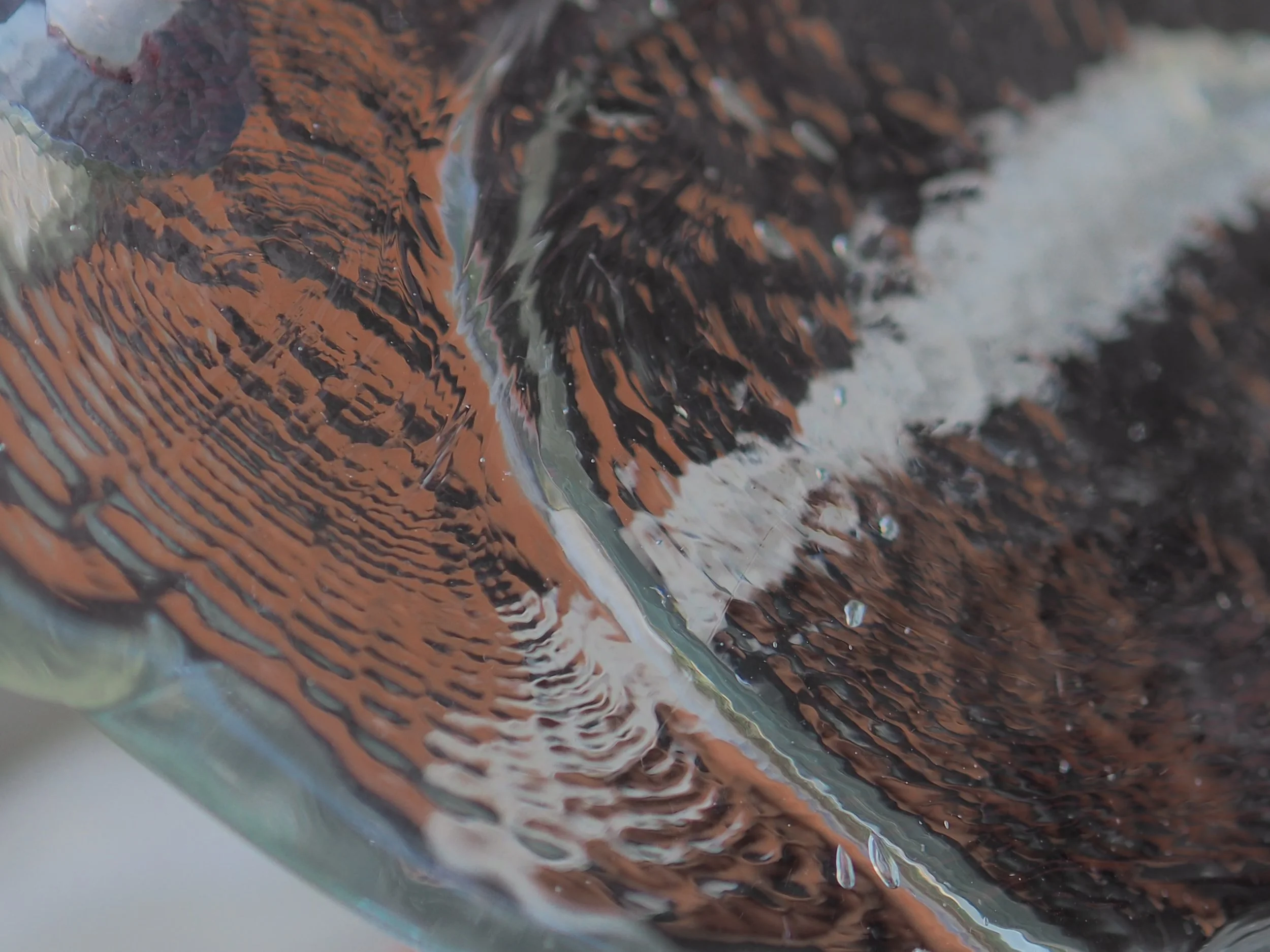
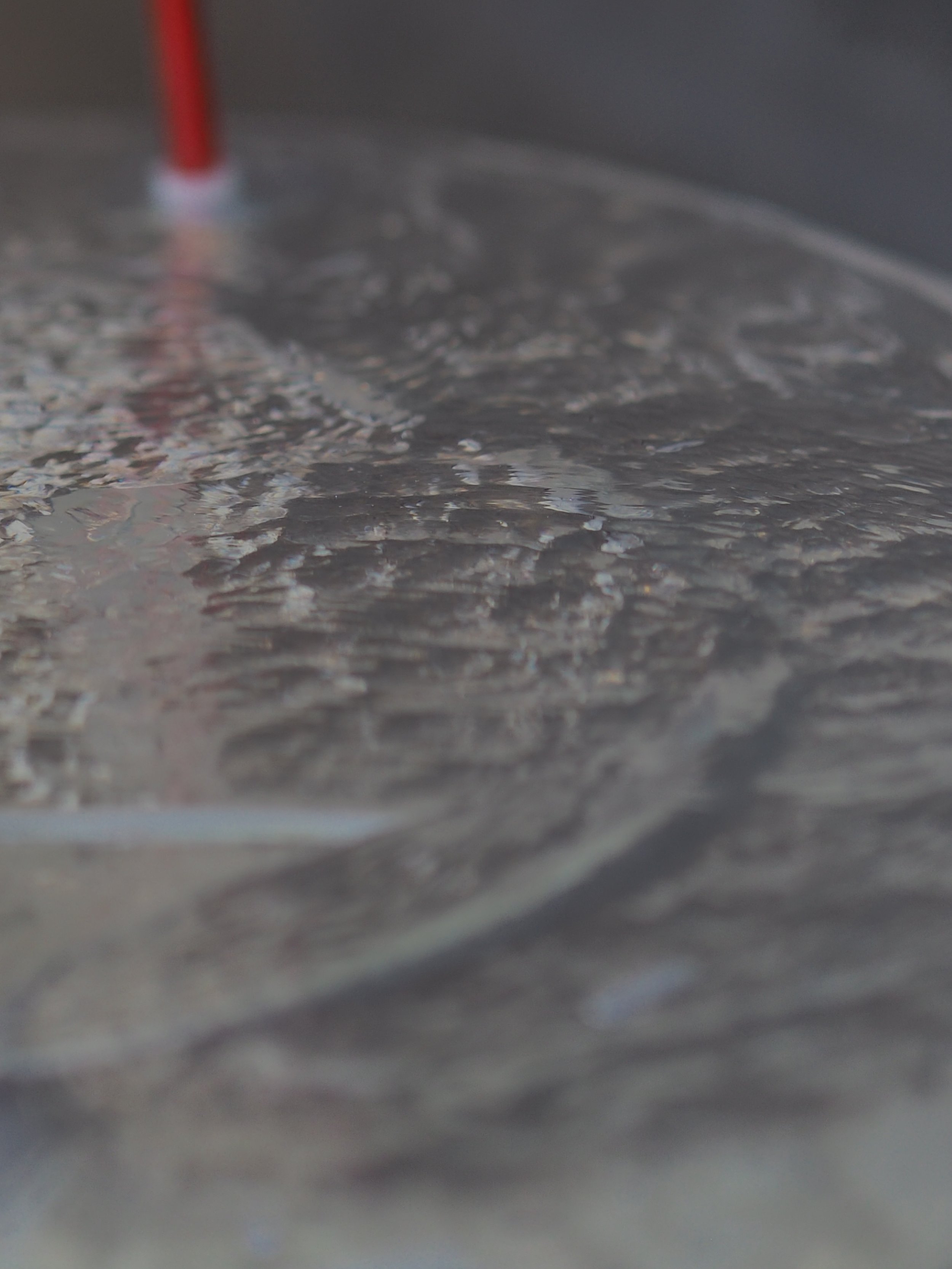
Hot casted glass puddles
Red wire
”A puddle in Australia” embraces the polar night in the north, where autumn’s final wild blooms surrender to frost, lingering as silent witnesses to Earth’s slumber. The puddle freezes into a tableau—a flower in winter’s embrace, its petals entwined in a delicate ballet. Motion halts, yet the flower’s stem evokes vibrant life, suspended in crystalline reverie.